


There was a time when editing a video felt like a job all by itself.
You recorded the footage. Then you sat down for hours. You trimmed awkward pauses. You cut out mistakes. You fixed the sound. You added text. You searched for music. You adjusted timing again and again. Then you exported it, watched it back, spotted something annoying, and went right back into the timeline.
That used to be normal.
Now it feels old.
The internet moves too fast for that kind of workflow. Content does not wait. Trends do not wait. Audiences do not wait. If you spend three days polishing one short video, someone else has already posted ten. That is the real reason people are moving toward AI video tools. It is not because editing is impossible. It is because the old way takes too much time, too much energy, and too much attention away from the things that actually grow a brand.
And that changes everything.
If you are a creator, you need to post often enough to stay visible. If you are a business owner, you need content that helps people notice you, trust you, and remember you. If you are trying to grow online, video is no longer optional. It is one of the biggest ways people discover products, follow creators, and make buying decisions.
But here is the problem. Video content works. Editing is the part that slows everything down.
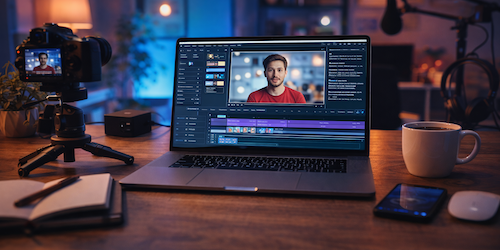
That is why AI editing tools are getting so much attention right now. They are not trying to replace creativity. They are trying to remove the boring, repetitive work that eats up your day. Instead of spending hours doing tiny manual edits, you can now upload a video, let the tool clean things up, turn it into clips, add captions, fix timing, and give you something usable much faster.
That is a huge shift.
It means one person can do the work that used to take a small team. It means a business can produce content without waiting around for long edit cycles. It means a creator can stop feeling trapped inside editing software and start focusing more on ideas, hooks, storytelling, and growth.
The truth is simple. Editing videos the old way is not just slow anymore. It is starting to hold people back.
Why does the old editing style feel broken now?
The old way of editing is not bad because it makes ugly videos. In fact, manual editing can still produce amazing work. The problem is that it takes too long for the kind of internet we live on now.
A few years ago, you could post less often and still do well. Today, that is much harder. Platforms reward consistency. Audiences expect regular content. Brands want speed. Creators want volume. And when you are stuck doing every little thing by hand, you lose momentum fast.
Think about what manual editing actually involves. You cut the video. You remove filler words. You fix audio. You add captions. You resize the frame for different platforms. You choose clips from a longer video. You search for B-roll. You add transitions. You adjust text placement. You make another version for a reel. Then another one for Shorts. Then maybe another for TikTok.
That is a lot of work for one video.
Now imagine trying to do that every week with multiple pieces of content.
That is where things start to break. It is not only tiring. It becomes a bottleneck. You start delaying posts because editing is not done yet. You stop testing ideas because each new video feels like a giant task. You hold back on content because you know what happens after you hit record.
And if you hire someone else, that comes with its own problems. Cheap editors often give weak results. Good editors cost real money. Even when they are good, you still need to wait for delivery, request changes, explain your style, and go through revisions.
So a lot of people end up stuck in the same place. They know video works. They know they need more of it. But the editing side keeps slowing them down.
That is exactly why AI tools are becoming such a big deal.
What AI video editors actually do for you
A lot of people hear “AI video editor” and imagine some magic button that makes a perfect video in one click. That is not really the point.
The real value is much more practical.
These tools take the tasks that normally waste the most time and speed them up. That includes things like:
- cutting silences
- removing filler words
- auto-generating captions
- reframing horizontal videos into vertical clips
- improving audio clarity
- adding B-roll
- spotting strong moments from long videos
- creating short clips for social platforms
- helping with hooks, subtitles, and simple polish
That is why people like them. They reduce the grind.
You still need a good idea. You still need something worth saying. You still need to know your audience. But now you do not have to spend half your life cleaning up the same boring editing problems over and over.
That alone can change how often you post.
It can also change how you think. Instead of asking, “Do I really want to go through the editing pain again?” you start asking, “How many pieces of content can I get from this one recording?”
That is a much better question.
Why AI editing is such a big win for creators and businesses
For creators, the biggest win is speed.
If you record a long video, podcast, talking-head video, tutorial, or even a casual opinion clip, AI tools can help you turn that into multiple short videos quickly. That means one piece of content can lead to many posts instead of just one upload and done.
For business owners, the win is even bigger.
A business does not just need one nice brand video. It needs content all the time. Product clips. Behind-the-scenes videos. customer education. Social media videos. Short explainers. Offers. Tips. Testimonials. Quick updates. If every video takes forever to edit, content becomes a burden instead of a growth tool.
AI helps fix that.
It gives smaller teams a real chance to keep up. You do not need a giant media department to stay active online. You just need a smarter workflow.
That is why this change feels so important. It is not only about editing faster. It is about making content creation sustainable.
Not all AI video tools do the same thing
This part matters because many people jump into these tools expecting them all to work the same way. They do not.
Some tools are made for simple editing and quick setup. These are usually easier for beginners. You log in, upload your clip, choose a style, and let the tool do its thing. They feel smooth and friendly, but sometimes they do not give you deep control.
Other tools give you more editing power. They support both vertical and horizontal video. They offer audio cleanup, eye-contact correction, B-roll, subtitle styling, trimming, and stronger clip control. These tools can do more, but they may take a little longer to learn.
Then there are tools that are mainly built around repurposing. These are the ones people love when they already have long videos and want to turn them into short clips fast. That is a huge category now because short-form content is everywhere.
And now there is another layer too. Some AI tools are pushing into video generation, not just editing. That means you are not only cleaning up real footage. You are also creating new visuals, scenes, and video assets with AI.
That is where names like VEO and Pixverse start to matter.
Captions, Submagic, and Opusclip each show a different style
Some of the most talked-about tools show how wide this space has become.
“Captions.ai” is one of those tools that feels easy right away. It has a simple setup and does not try to bury you under a thousand buttons. For someone who wants a clean and basic entry into AI-assisted editing, that can be a real plus. The downside is that it can feel limited if you want stronger editing control. It works best when you want speed and simplicity more than deep customization.

Submagic is stronger for clipping and repurposing. It is built around the idea that one longer video can become many short pieces. That makes it really useful for creators who want to turn podcasts, interviews, or talking videos into a steady stream of short content. It also brings in useful extras like B-roll, audio cleanup, caption work, and other tools that make short-form videos look better without a lot of manual effort.
Then there is Opusclip.

Opusclip feels like the tool that keeps coming up when people want a more complete solution. It not only cuts clips. It helps with captions, clip scoring, scheduling, analytics, repurposing, posting flow, and overall content speed. That matters because content today is not only about editing one video. It is about building a repeatable machine that helps you publish more often.
That is where Opusclip stands out.
It starts to feel less like a single editing tool and more like a content production assistant.
Where Cliptalk and AI Video Cut fit in
Cliptalk and AI Video Cut belong in the part of this world that is focused on making content production faster and lighter.
These kinds of tools are attractive because they do not ask you to become a full editor. They are built around speed. You give them footage, and they help turn that footage into something useful for fast-moving platforms.

That matters a lot today because most people are not trying to make one perfect cinema-grade video every month. They are trying to make a lot of solid, watchable content that gets posted consistently.
That is a very different goal.
Cliptalk, AI Video Cut, Submagic, and Opusclip all speak to that need in different ways. They help reduce the slow parts. They help turn long content into shorter pieces. They help creators stop drowning in editing work.
And that is exactly why they are growing.
Where VEO and Pixverse change the conversation
Now let’s talk about VEO and Pixverse, because these names push the conversation beyond editing.
VEO and Pixverse matter because they point to the next stage of video creation. Instead of only helping you trim, polish, or clip footage you already recorded, they move into AI-generated video and visuals. That opens up a completely different kind of workflow.
Imagine this.

You record your main talking-head video. Then you use an editor like Opusclip or AI Video Cut to break it into shorts. After that, you add supporting visuals created with VEO or Pixverse to make those clips more eye-catching. Suddenly, you are not only editing faster. You are creating richer content without needing a giant production team.
That is where this gets exciting.
The wall between filming, editing, and visual creation is getting thinner. One tool helps clean up the content. Another finds the best moments. Another helps generate visual material. Another helps with scheduling and posting. Bit by bit, the whole content machine gets faster.
What used to take days can now happen much faster.
Why short-form repurposing is one of the biggest wins
One of the smartest things AI tools do is repurpose content.
This may sound simple, but it changes everything.
A lot of creators still think in this old way: record one video, post one video.
That is a waste now.
If you record a ten-minute video, there may be five strong short clips inside it. Maybe more. There may be one moment with a great hook, another with a bold opinion, another with a useful tip, and another with a funny line. Manual editors can find these moments, but it takes time. AI tools can speed up that process.
That means every recording can stretch further.
This is one of the biggest reasons people are moving toward tools like Submagic, Cliptalk, AI Video Cut, and Opusclip. They help squeeze more value out of the content you already have.
And that is smart because recording is an effort, too. If you are already sitting down to create, you should be getting as much value from that time as possible.
The price question matters too
Speed is great, but people also care about money.
That is where AI tools become even more appealing.
Traditional editing can get expensive. If you are paying editors again and again, the costs add up fast. If you do it yourself, the money cost may be lower, but the time cost is huge. And time matters. Lost time means lost output. Lost output often means lost reach, lost sales, or lost growth.
AI tools sit in the middle.
They are usually much cheaper than hiring a full editor for every piece of content, and they save far more time than doing everything alone. That makes them attractive for solo creators, small teams, startups, and business owners who want more content without building a large media setup.
Of course, not every tool is priced equally well. Some feel expensive for what it offers. Others feel much more reasonable. But overall, the value becomes clear when you compare the monthly cost to the amount of time you get back.
And that time is where the real return happens.
The biggest thing people still get wrong
Some people still think AI editing tools are only for lazy creators.
That is not true.
Using a better tool does not make someone lazy. It makes them efficient.
Nobody says a business owner is lazy for using email software instead of writing every message by hand. Nobody says a designer is lazy for using better tools. Nobody says a marketer is lazy for scheduling posts instead of posting one by one all day.
The same logic applies here.
AI editing tools are not about avoiding work. They are about avoiding wasted work.
The goal is to spend more time on the parts that matter. Better ideas. Better storytelling. Better offers. Better hooks. Better consistency. Better audience understanding.
That is the work that really moves the needle.
So which type of AI tool makes the most sense?
That depends on what kind of content you make and how you like to work.
If you are brand new and want something that feels easy, a simple platform may be the best place to start. You do not need every advanced feature on day one. Sometimes ease of use matters most.
If you already make longer videos and want to turn them into shorts, then a repurposing-focused tool will probably help you the most. That is where things like Submagic, Cliptalk, AI Video Cut, and Opusclip become very attractive.
If you want something broader with more features, stronger editing help, clip scoring, scheduling, and better workflow depth, Opusclip sounds like the kind of tool that makes the strongest case.
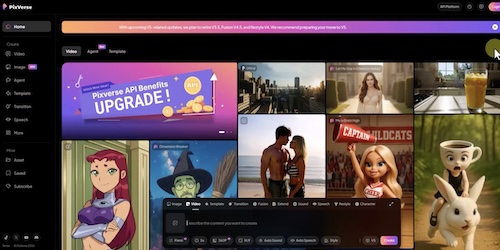
And if you want to go beyond editing and start mixing real footage with AI-generated visuals, then VEO and Pixverse become part of that next-level setup.
The best choice is not about picking the fanciest name. It is about choosing the tool that helps you publish more good content with less friction.
The future of content is faster, lighter, and smarter
This shift is not slowing down.
In fact, it is only getting bigger.
The people who adapt early usually get the biggest advantage. They make more content. They test more formats. They learn faster because they publish faster. They stop treating editing like a giant wall and start treating it like one step in a smoother system.
That is where everything changes.
Because once editing stops being the bottleneck, content starts flowing. And when content flows, growth gets easier.
More posts lead to more chances. More chances lead to more data. More data leads to better decisions. Better decisions lead to stronger content. That is how momentum builds.
The old model was heavy. It was slow. It asked too much for every single video.
This newer model is different. It is lighter. Faster. Smarter. More practical for the pace of the internet we live in now.
And that is why editing videos the old way really is dying.
Not because manual editing disappeared.
But most people cannot afford to move that slowly anymore.
Final thoughts
If you are still doing every part of video editing the hard way, this is the moment to rethink it.
You do not need to suffer through long editing sessions just because that used to be normal. You do not need to stay stuck in software for hours just to post one short clip. And you definitely do not need to treat editing like a full-time burden when tools now exist to make the whole process easier.
That is why AI video editing matters so much.
It helps creators create more. It helps businesses market faster. It helps small teams compete better. It helps one piece of content turn into many. And it gives people back the one thing that old editing keeps stealing from them.